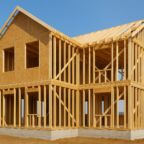
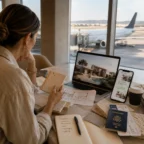
There’s a particular kind of optimism people have when they first decide to build a house in Greece from abroad.
Usually it starts with:
“We’ll fly over a couple of times a year and manage things remotely.”
And honestly?
That sounds completely reasonable… right up until someone sends you a blurry photo of plumbing sticking out of a concrete slab with the message:
“Need answer urgently.”
No explanation.
No drawing.
No indication of whether the pipe is for a sink, a shower, or perhaps modern art.
This is normally where the romantic Pinterest phase ends.
The good news is:
yes, it absolutely can be done successfully.
Many of our clients live in the US, UK, Australia, Northern Europe, or elsewhere in the world while building here in Greece. Some only visit once or twice during the entire process.
The bad news?
You cannot manage a Greek construction project the same way you’d manage ordering patio furniture online.
Building remotely in Greece works beautifully when the system is set up correctly from the beginning.
When it’s not… things get expensive very quickly.
First: understand what actually goes wrong
Foreign buyers often assume the biggest challenge is:
- permits,
- language,
- or finding workers.
Those matter.
But the real problems usually come from:
- unclear communication,
- assumptions,
- lack of documentation,
- missing decisions,
- and nobody truly coordinating the moving parts.
Because construction in Greece is still, in many ways, relationship-driven.
Things are often solved:
- over phone calls,
- voice notes,
- site conversations,
- favors,
- “don’t worry we’ll handle it,”
- and a level of improvisation that would terrify Germans.
If you’re abroad, you’re missing all the invisible conversations happening on-site.
And unless someone is actively protecting the project vision, things slowly drift.
Not catastrophically at first.
Just… little by little.
- A cheaper tile here.
- A different aluminum profile there.
- A gazebo detail “simplified.”
- A drain adjusted because “it was easier this way.”
Until one day you show up and realize the house looks like your design’s distant cousin.
The biggest myth foreigners believe
“I’ll just hire a contractor and they’ll handle everything.”
This is where many projects begin wandering into the wilderness.
In Greece, contractors are not automatically acting as:
- project managers,
- design guardians,
- budget controllers,
- quality inspectors,
- permit coordinators,
- or client representatives.
Some are excellent.
Some are not.
Some are builders.
Others build creatively.
And many foreign clients assume:
“The contractor will tell me if something is wrong.”
Sometimes they will.
Sometimes they absolutely will not.
Especially if:
- it delays work,
- costs more money,
- or requires redesign.
What actually makes remote building work
The projects that run smoothly from abroad usually have five things:
1. A fully resolved design before construction begins
This sounds obvious.
It is apparently not obvious.
Many people try to “figure things out as they go.”
That approach works wonderfully for:
- backpacking through Europe,
- choosing tapas,
- and regrettable tattoos.
It works less well for a major financial investment.
Every unresolved decision during construction creates:
- delays,
- confusion,
- rushed choices,
- budget creep,
- and contractor improvisation.
The more complete the design package is before construction starts:
- the smoother the build,
- the more accurate the pricing,
- and the fewer surprises later.
What many foreign buyers don’t realize is that permit drawings and construction drawings are not the same thing.
Permit drawings are primarily created to obtain approval from the authorities.
They establish the legal framework of the project:
- size,
- placement,
- basic layout,
- planning compliance,
- structural coordination,
- and the information required for the permit itself.
But they do not include the level of detail required for high-quality construction execution.
That’s where construction documentation becomes extremely important — especially when building remotely.
Detailed construction documentation helps answer the hundreds of questions that inevitably appear during construction:
- how materials meet,
- exact dimensions,
- lighting placement,
- built-in details,
- waterproofing transitions,
- gazebo connections,
- exterior finishes,
- kitchen coordination,
- custom elements,
- drainage solutions,
- and all the small decisions that determine whether a project feels refined… or improvised.
Without that level of construction documentation and technical detailing, many decisions end up being solved on-site in real time.
And while improvisation is deeply embedded in Mediterranean construction culture, it is not always the best strategy for protecting a significant investment from another country.
2. Someone protecting the vision
This matters enormously.
Because no matter how beautiful the renderings are, the real project happens:
- on dusty sites,
- during supplier calls,
- while workers ask questions,
- and when somebody decides whether to “just do it this way instead.”
If nobody is checking details consistently, remote projects slowly mutate.
Not maliciously.
Just through momentum.
And once concrete is poured, “small changes” become extremely expensive.
This is also why many foreign owners choose to have construction project management and coordination during construction.
Not because contractors are automatically bad.
But because construction involves hundreds of moving parts, decisions, suppliers, trades, site questions, scheduling issues, and detail clarifications happening continuously throughout the process.
When nobody is actively coordinating those moving parts, communication gaps start forming very quickly — especially when the owners are abroad.
A good project coordination system helps:
- keep the project aligned with the design,
- organize communication between trades,
- track decisions,
- reduce expensive misunderstandings,
- and catch issues early before they become difficult or costly to reverse.
Particularly in Greece, where many construction decisions still happen informally on-site, having somebody involved can make an enormous difference to how smoothly a remote project unfolds.
3. Communication systems that don’t descend into chaos
If your project communication exists across:
- WhatsApp,
- Viber,
- Instagram DMs,
- email,
- random screenshots,
- and a contractor calling your cousin at midnight…
you are entering dangerous territory.
The best remote projects have:
- centralized communication,
- organized drawings,
- documented decisions,
- clear approvals,
- and regular progress updates.
Otherwise, six months later, nobody remembers:
- who approved what,
- why something changed,
- or who decided the air-conditioning unit should become the visual focal point of the terrace.
Yes, you will still need to make decisions remotely
A lot of them.
More than you think.
Because building a house involves hundreds of choices:
- finishes,
- lighting,
- plumbing fixtures,
- drainage,
- materials,
- colors,
- electrical positions,
- landscaping,
- shading systems,
- cabinetry,
- hardware,
- pool equipment,
- outdoor details,
- and approximately 47 conversations about stone.
At some point you will find yourself discussing:
“warm beige limewash undertones”
while sitting in an airport in another country wondering how your life arrived here.
This is normal.
Timing in Greece is… different
This deserves its own section.
Foreign clients often expect construction schedules to behave like Swiss train systems.
Greece is more… interpretive.
Things that affect timelines:
- heatwaves,
- ferries,
- August holidays,
- strikes,
- wind,
- rain,
- delayed suppliers,
- missing materials,
- permit departments,
- island logistics,
- and workers vanishing for local festivals, holidays, and unexplained reasons.
This does not mean projects cannot be completed successfully.
They absolutely can.
But flexibility matters.
If your dream timeline is:
“start in March, finished by June”
there’s a strong chance HGTV has prepared you for the wrong industry.
The emotional side nobody talks about
Building remotely can feel strangely vulnerable.
You’re investing significant money into:
- land,
- construction,
- legal processes,
- and decisions happening thousands of kilometers away.
There are moments where it feels exciting.
There are moments where it feels terrifying.
And there are moments where you stare at photos of rebar on your phone pretending you fully understand what you’re looking at.
You are not alone.
Good project structure reduces stress enormously.
Not because problems disappear — construction always has problems — but because issues are identified early, communicated clearly, and solved properly.
That changes everything.
So… can you successfully build in Greece while living abroad?
Absolutely.
People do it every year.
But the successful projects are rarely the ones running on:
- blind trust,
- improvisation,
- fragmented communication,
- the cheapest possible pricing,
- or “we’ll figure it out later.”
The best projects usually come from:
- careful planning,
- realistic budgets & expectations,
- strong local coordination,
- detailed design work,
- and clear systems from the beginning.
Because the goal isn’t just:
“finish the house.”
The goal is to arrive in Greece and feel:
“Yes. This is exactly what we imagined.”
Not:
“Why is the outdoor kitchen facing the wall?”
Thinking about building in Greece from abroad?
Building remotely in Greece is completely possible.
But it tends to go far more smoothly when the project is approached with:
- realistic planning,
- proper documentation,
- clear communication,
- and people locally involved who understand how Greek construction actually works.
Because while the lifestyle side of Greece is wonderfully relaxed…
construction usually benefits from the opposite.